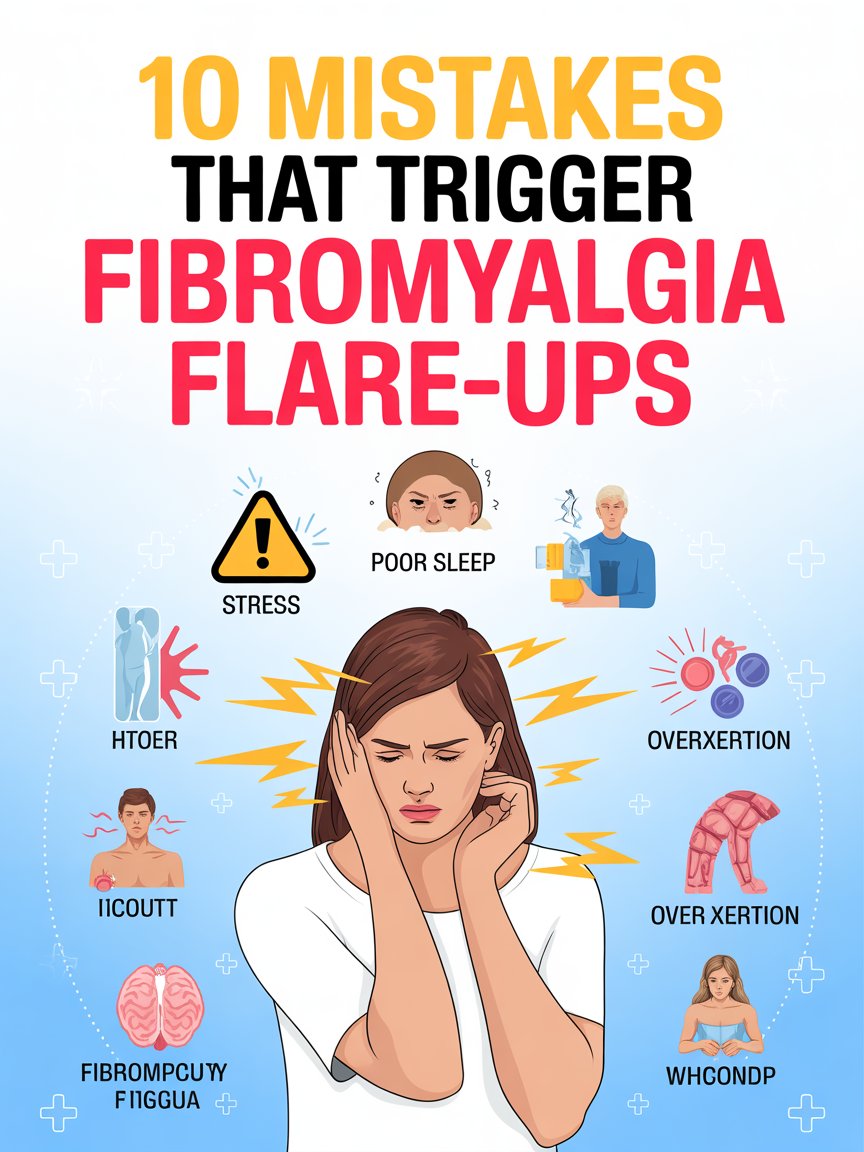

10 Mistakes That Trigger Fibromyalgia Flare-Ups
Introduction: Understanding Flare-Ups
Fibromyalgia flare-ups are periods when symptoms such as pain, fatigue, and stiffness suddenly worsen. These flare-ups can be frustrating and unpredictable, often interfering with daily life. While triggers vary from person to person, certain common habits and mistakes can increase the risk. Recognizing and avoiding these triggers can help reduce the frequency and intensity of flare-ups.
1. Overdoing Physical Activity
Pushing your body too hard is one of the most common causes of flare-ups. Doing too much exercise or physical work in a short period can lead to increased pain and exhaustion. It is important to pace yourself and gradually build activity levels over time.
2. Skipping Rest and Recovery
Ignoring the need for rest can quickly lead to burnout. The body needs time to recover, especially when dealing with chronic pain. Without proper rest, muscles and the nervous system can become overwhelmed, triggering symptoms.
3. Poor Sleep Habits
Sleep plays a critical role in managing fibromyalgia. Irregular sleep schedules, late nights, or poor sleep quality can worsen pain and fatigue. Consistent, restful sleep is essential for preventing flare-ups.
4. High Stress Levels
Stress is a major trigger for fibromyalgia symptoms. Emotional stress, anxiety, or major life changes can increase pain sensitivity. Learning stress management techniques such as deep breathing or mindfulness can help reduce flare-ups.
5. Unhealthy Diet Choices
Consuming processed foods, excessive sugar, and unhealthy fats may increase inflammation in the body. Poor nutrition can also lead to low energy and worsen symptoms. A balanced diet with whole, nutrient-rich foods can help support symptom control.
6. Dehydration
Not drinking enough water can contribute to fatigue, headaches, and muscle cramps. Dehydration may also make the body more sensitive to pain. Staying hydrated is a simple but important step in managing fibromyalgia.
7. Ignoring Early Warning Signs
Many people experience early signs of a flare-up, such as increased fatigue, mild pain, or stiffness. Ignoring these signals and continuing with normal activities can worsen symptoms. Recognizing these warning signs allows you to rest and adjust your routine before symptoms escalate.
8. Lack of Consistent Routine
An irregular daily routine can disrupt sleep, eating habits, and energy levels. Inconsistent schedules may make symptoms harder to manage. Establishing a steady routine helps the body maintain balance and reduces the risk of flare-ups.
9. Exposure to Cold or Damp Weather
Cold and damp conditions can increase muscle stiffness and pain in some individuals with fibromyalgia. Sudden changes in weather may also trigger symptoms. Keeping warm and dressing in layers can help reduce discomfort.
10. Not Following Treatment Plans
Skipping medications, therapy sessions, or recommended lifestyle changes can lead to worsening symptoms. Consistency in treatment is important for long-term management. Following a personalized care plan can help prevent frequent flare-ups.

Leave a Comment