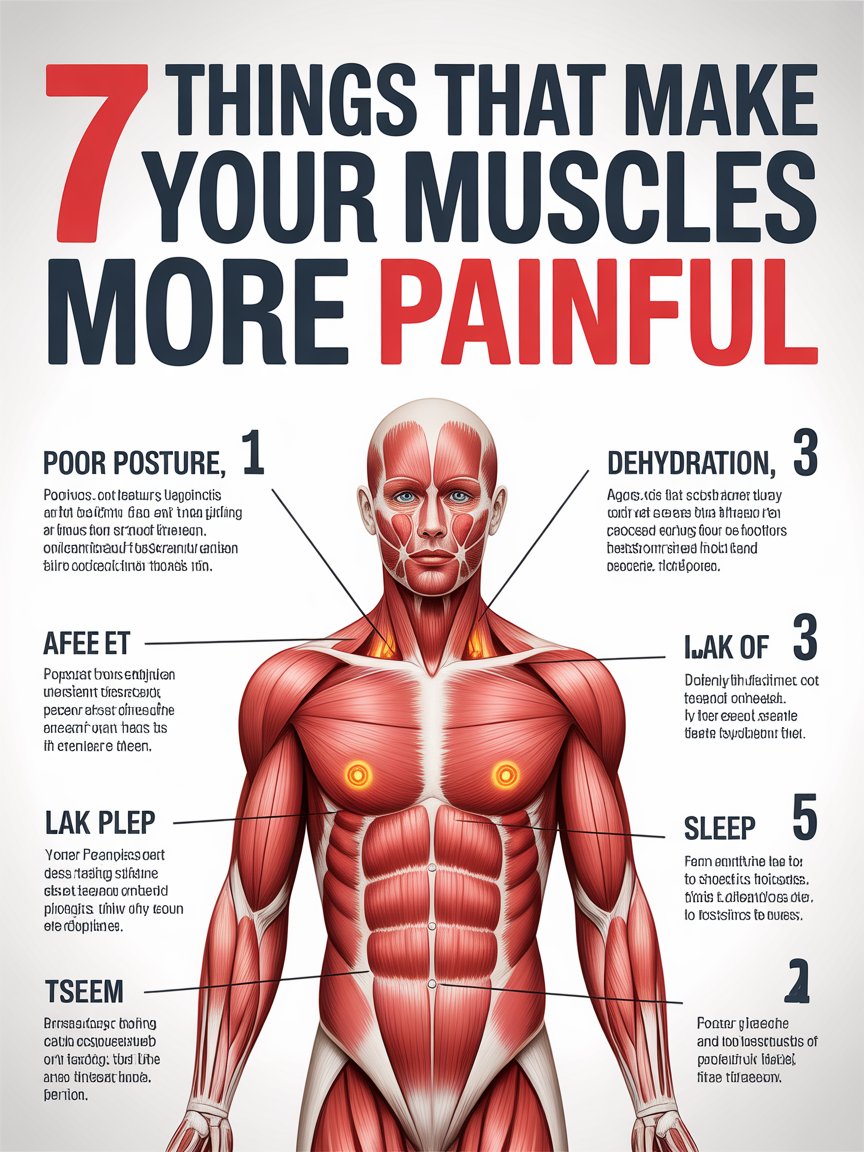

7 Things That Make Your Muscles More Painful
Introduction
Muscle pain can affect your daily life, making simple tasks feel difficult and exhausting. Whether it’s due to overuse, stress, or conditions like Chronic Pain, understanding what worsens muscle discomfort is essential. By identifying these triggers, you can take steps to reduce pain and improve overall muscle health.
1. Lack of Movement
Staying inactive for long periods can cause muscles to stiffen and tighten.
When muscles aren’t used regularly, they lose flexibility and strength, leading to increased discomfort.
What to Do Instead
Incorporate gentle movement like walking or stretching throughout the day to keep muscles active.
2. Overexertion
Pushing your body too hard can lead to muscle strain and soreness.
Excessive exercise or heavy physical activity without proper rest often worsens muscle pain.
What to Do Instead
Balance activity with rest and avoid overworking your muscles beyond their limits.
3. Poor Posture
Bad posture places unnecessary strain on muscles.
Sitting or standing incorrectly for long periods can lead to tension, especially in the neck, shoulders, and back.
What to Do Instead
Maintain proper posture and take breaks to stretch and realign your body.
4. Dehydration
Muscles need proper hydration to function well.
Lack of water can lead to cramps, tightness, and increased soreness.
What to Do Instead
Drink enough water throughout the day to keep your muscles hydrated and healthy.
5. Stress and Tension
Emotional stress often shows up physically in the body.
Tension can build in muscles, making them feel tight and painful.
What to Do Instead
Practice relaxation techniques like deep breathing or meditation to reduce stress.
6. Poor Sleep Quality
Sleep is essential for muscle recovery and repair.
Without enough rest, muscles don’t have time to heal, leading to ongoing pain and fatigue.
What to Do Instead
Create a consistent sleep routine and ensure your sleeping environment is comfortable.
7. Nutritional Deficiencies
Lack of essential nutrients can affect muscle health.
Deficiencies in vitamins and minerals may lead to weakness, cramps, and increased pain.
What to Do Instead
Eat a balanced diet rich in nutrients that support muscle function and recovery.
Understanding Your Body
Every person experiences muscle pain differently. Paying attention to what triggers your discomfort can help you make better lifestyle choices.
The Role of Daily Habits
Small habits, like staying active and hydrated, play a big role in muscle health. Consistency in these areas can prevent pain from worsening.
Managing Pain Effectively
Combining rest, gentle movement, and relaxation techniques can help reduce muscle discomfort and improve recovery.
Long-Term Benefits of Awareness
When you avoid these common triggers, your muscles can recover more efficiently, leading to less pain and better mobility over time.
Building a Balanced Routine
A routine that includes movement, rest, hydration, and proper nutrition supports overall muscle health and reduces the risk of chronic discomfort.
Staying Consistent
Consistency is key when managing muscle pain. Even small daily improvements can lead to significant long-term results.


Leave a Comment