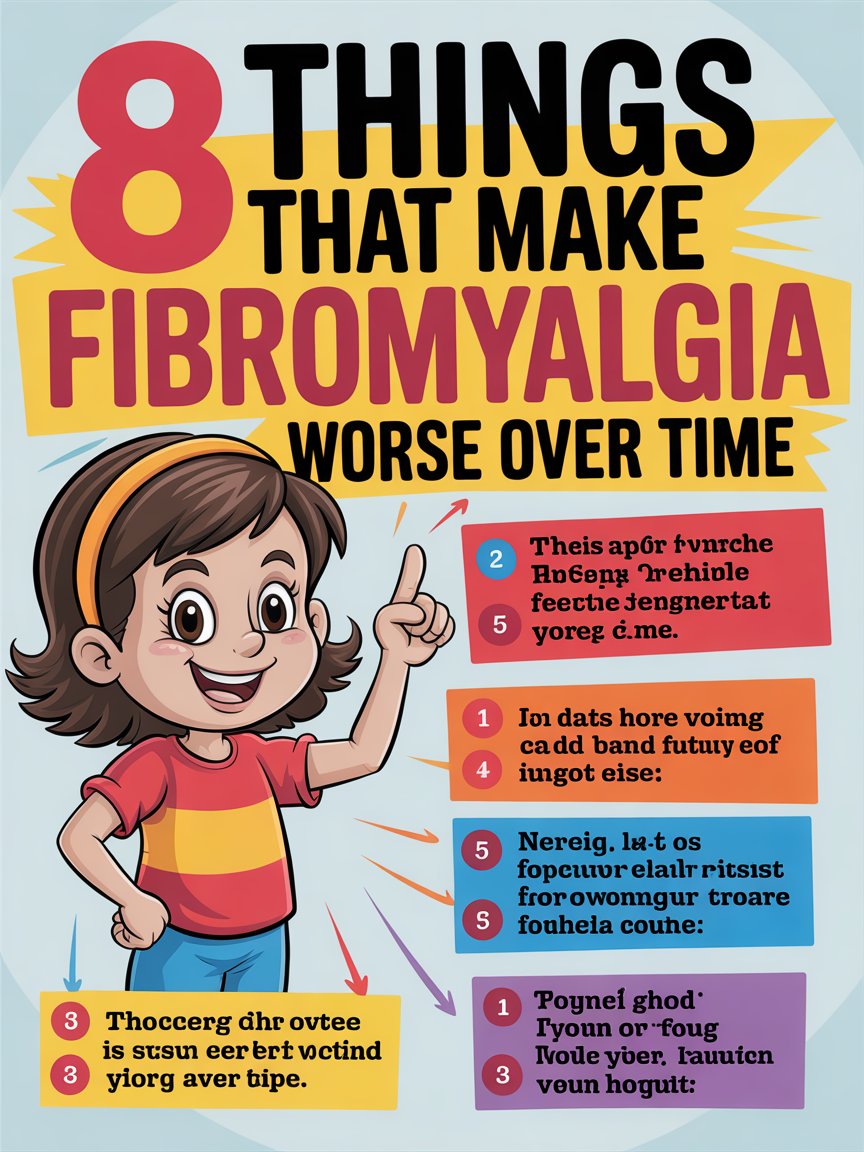

8 Things That Make Fibromyalgia Worse Over Time
Introduction
Living with Fibromyalgia requires long-term care and awareness. While symptoms can fluctuate, certain habits and lifestyle patterns can gradually make the condition worse over time. Recognizing and avoiding these factors can help you maintain better control and improve your overall quality of life.
1. Ongoing Poor Sleep
Chronic sleep problems can intensify symptoms over time.
Lack of deep, restorative sleep increases pain sensitivity, fatigue, and cognitive issues.
What to Improve
Stick to a consistent sleep routine and create a calming bedtime environment.
2. Constant High Stress
Long-term stress keeps your body in a heightened state.
This can worsen pain signals, increase muscle tension, and lead to more frequent flare-ups.
What to Improve
Incorporate daily stress management techniques like meditation or breathing exercises.
3. Physical Inactivity
Avoiding movement can lead to stiffness and weakness.
Over time, this reduces flexibility and makes pain more persistent.
What to Improve
Engage in gentle, regular activities such as walking or stretching.
4. Overexertion Without Recovery
Repeatedly pushing your limits can damage long-term progress.
Overexertion often leads to prolonged flare-ups and increased fatigue.
What to Improve
Practice pacing—balance activity with rest to protect your energy.
5. Poor Diet Habits
Unhealthy eating patterns can increase inflammation.
Over time, this may contribute to worsening pain, fatigue, and overall health.
What to Improve
Focus on whole, nutrient-rich foods that support your body.
6. Ignoring Early Symptoms
Small warning signs often appear before symptoms worsen.
Ignoring them can lead to more severe and longer-lasting flare-ups.
What to Improve
Pay attention to your body and respond early with rest or adjustments.
7. Lack of Routine
An inconsistent lifestyle can destabilize your condition.
Irregular sleep, meals, and activity patterns may increase symptom unpredictability.
What to Improve
Create a structured daily routine to support balance and stability.
8. Untreated Mental Health Challenges
Anxiety, depression, or emotional stress can worsen symptoms.
Over time, these can increase pain perception and reduce coping ability.
What to Improve
Seek support, practice mindfulness, and prioritize mental well-being.
Understanding Long-Term Impact
Fibromyalgia symptoms are influenced by daily habits. Small negative patterns, when repeated over time, can gradually increase pain and reduce overall function.
The Importance of Prevention
Preventing symptom worsening is just as important as managing flare-ups. Early action and awareness can help maintain stability.
Building Healthy Habits
Simple habits—like consistent sleep, gentle movement, and stress control—create a strong foundation for long-term management.
Staying Consistent
Consistency is key. Even small daily efforts can help prevent symptoms from worsening over time.
Long-Term Benefits
Avoiding these harmful patterns can lead to fewer flare-ups, improved energy, and better quality of life.

Leave a Comment